

Big Night (1996) is as enjoyable as a plate of spaghetti Bolognese. Directed by then debutant filmmakers Stanley Tucci and Campbell Scott, it is an immigrant’s tale full of passion, laughter and subtlety.
Two Italian brothers, Primo (Tony Shalhoub) and Secondo (Stanley Tucci) run a restaurant in 50s New Jersey that is out-competed by a rival despite – or rather because of – its authenticity and tastefulness brought from the old country. The bank will foreclose if they miss one more payment, so the race begins to throw a lavish feast accompanied by a big shot musician guest to save their livelihood. Opposing temperaments, love triangles, and the difficulty of cultural assimilation lead to complications, humour, and surprising dramatic depth.

The older brother Primo is a stubborn and petulant chef with lovable eccentricity and romantic shyness. Secondo is a frustrated businessman carrying the larger responsibility of managing the restaurant while having big ideas about success and life in America. His go-getter attitude masks the unease of a displaced identity, grabbing onto anything and anyone to keep him afloat, but afraid to commit. If home is not home anymore, who are you and where do you belong? Do you stay or go back? The film flirts with post-war ennui and lightly hints at the imbalance between men and women that will contribute to the civil rights movement down the line. After all the carnage and ruin, America has turned around with a beaming smile saying “it’s all going to be alright!” What if it won’t be?
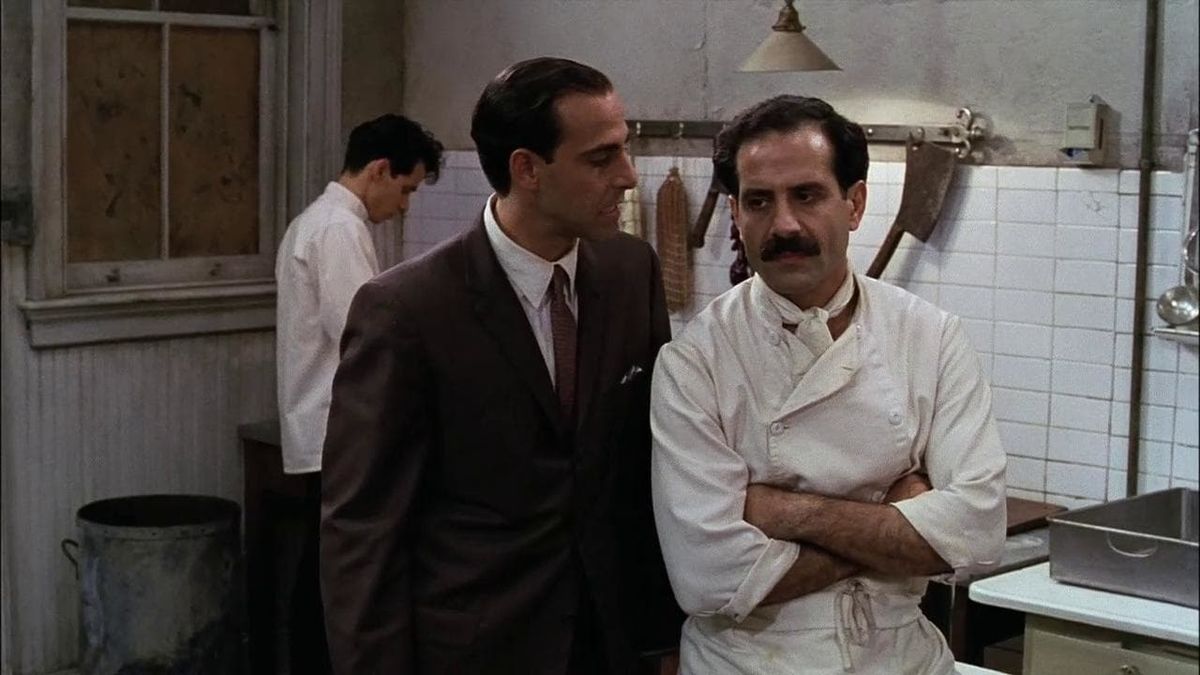
Big night is an effortless period film. Tucci and Scott seem to trust that the audience won’t need to be pushed to romanticize the past, with nostalgia being inherent in the 50s setting. Their Scorsese-lite tracking shots, dollies, montage, long takes and silent slow-motion interludes do a great job of making the film cinematic. They have practically defied the small budget without being too showy or pretentious ($4,100,000 more than tripled at the worldwide box-office). After the success of Sex, lies, and videotape (1989), then Pulp fiction (1994), independent filmmakers started to get more opportunities – a chance then unknown players Tucci and Scott have grabbed with as many hands as they could.
This meta-context directly leads to the creative conflict and dilemma of art vs. commerce. “People should come just for the food.” – Primo exclaims repeatedly. Although art can have inherent value, the film also makes a credible case for entertainment not only from the characters’ point of view, but embedded in the structure that places a high value both on depth and joy. The thematically rich screenplay (written by Tucci and Joseph Tropiano), the detailed art direction (with food-porn to boot), the fluid cinematography and the precise editing create a piece that draws the viewer in while the tone, the characters and their motivations are more complex and ambivalent than in films designed for a large audience. Mirroring this, the film makes fun of philistine Americans expecting commoditized versions of Italian food. Yet, Big night is so entertaining precisely due to the accessible treatment of such themes as enjoying life, love, community, food and music, and how this shared engagement with the physical/material can unexpectedly become a near sacral and ecstatic experience. “Give to people what they want. Then, later, you can give them what you want.” – Says Pascal.
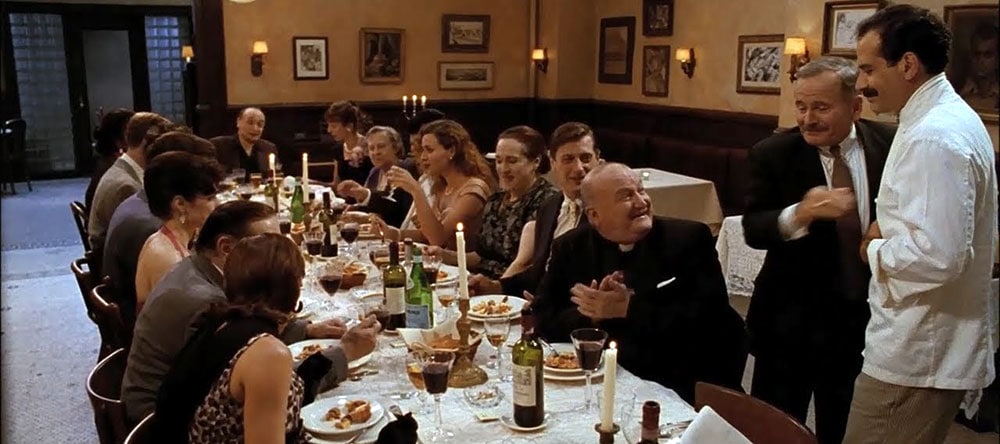
Tucci is strong as the film’s anchor while Shalhoub is a scene-stealer. They are an affectionate and warring duo excellently playing off of each other. Minnie Driver is captivating as Secondo’s suffering girlfriend Phyllis and Ian Holm is riotous as Pascal the Italian rascal who likes to greet Secondo by literally biting him in the ass. Their playful banter has a thinly veiled animosity underneath that creates some very funny scenes and is also the catalyst of great dramatic conflict. Isabella Rossellini is emblematically classy and wise playing Gabriella, Pascal’s wife who is having an affair with Secondo.
Glances, body language and what is unsaid beneath the words tell you more about who these people are than any long exposition ever could. Despite all hardship, loss and conflict, the brotherly bond cannot be broken.
Rating: 82%

 Ágoston's Film Odyssey