
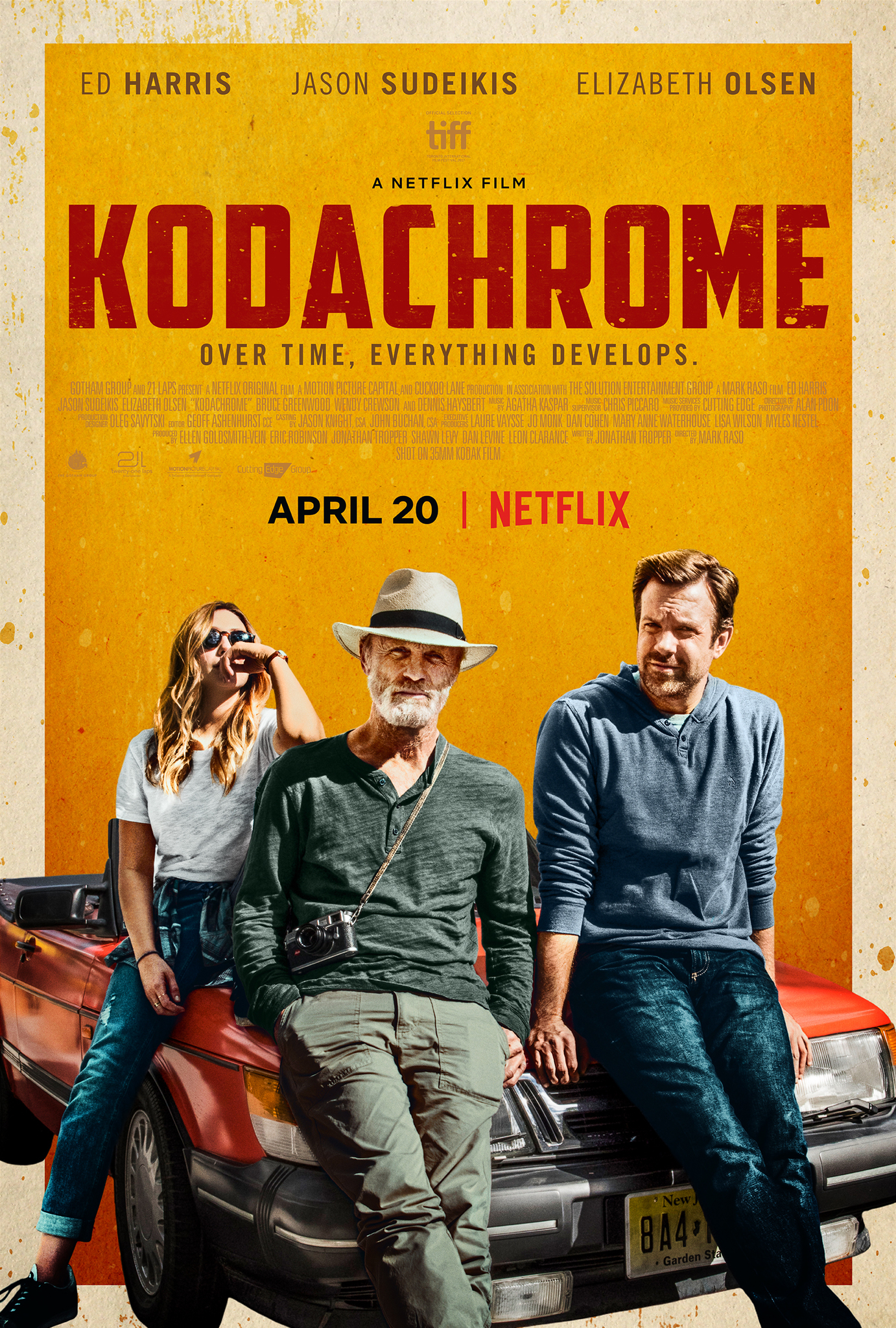
Netflix’s road movie father-son drama Kodachrome (2017) is a trip down memory lane that has lots of predictable moments, but one that is moving and enjoyable. A calm and amiable movie to watch on a Sunday afternoon, when you want to feel something without risk.
Jonathan Tropper’s screenplay (Based on The New York Times article “For Kodachrome Fans, Road Ends at Photo Lab in Kansas“, originally published December 29, 2010) goes from one beaten down path to another from a washed up A & R Representative Matt (Jason Sudeikis) being uncomfortably pulled into a road-trip by his dying father Ben (Ed Harris) and his carer Zooey (Elizabeth Olsen). The old man is a famous photographer who has artistic and financial success, a broken marriage, an estranged son and lots of other ruined relationships under his belt. Now he just wants to develop the last of his old Kodachrome photographs before the final place doing it stops the practice altogether, then hopefully die in peace, having mended the shattered connection with Matt.

While there is poignancy to the vulnerable banter of Matt and Zooey – both divorcees not sure what to do with their lives – courtesy of the likable Sudeikis and the always deep Olsen, the only multi-dimensional character in the film is Ben, played by the magnificent Ed Harris, one of the greatest American actors of the past few decades. Yet even Ben’s characterization has contrived aspects to it. He behaves to fulfil a character-type on a page, the suffering artist chasing the high of artistic creation above all else, then by seeing the light of his own mortality, trying to right old wrongs. Harris delivers a pot-smoked, poisonous monologue about unhappiness, narcissism, ambition, sex, rage, that are the stuff great art is made of, but that’s as close he gets to becoming flesh and blood and express what really made his life turn sour. It would be rather convenient if a life lived so selfishly gets redeemed. In the end everything happens a certain way because – It’s in the script.
The film and its characters are driven by the predetermined plot, rather than any sort of narrative growing out of the character’s individuality and how they behave as in better indie-type movies. There is nothing remarkable about how it’s executed by 2nd time director Mark Raso visually or aurally. Notably it has been shot on 35 mm film, however given the professionally lit but uninspired cinematography, this mainly serves as a gesture. Its connection to photography – Ben running out of time and trying to freeze it – still sends an effective but simplistic message that only gets questioned in relation to valuing art and its objects above people and relationships. There is waxing philosophically about preserving something real and palpable in the flatness of the digital era, conservatively denying the possibility that great art can come from using the newest technology and it is not only an act of survival or commercial cynicism, but that it can also have a soul to it as long as the artist has one.
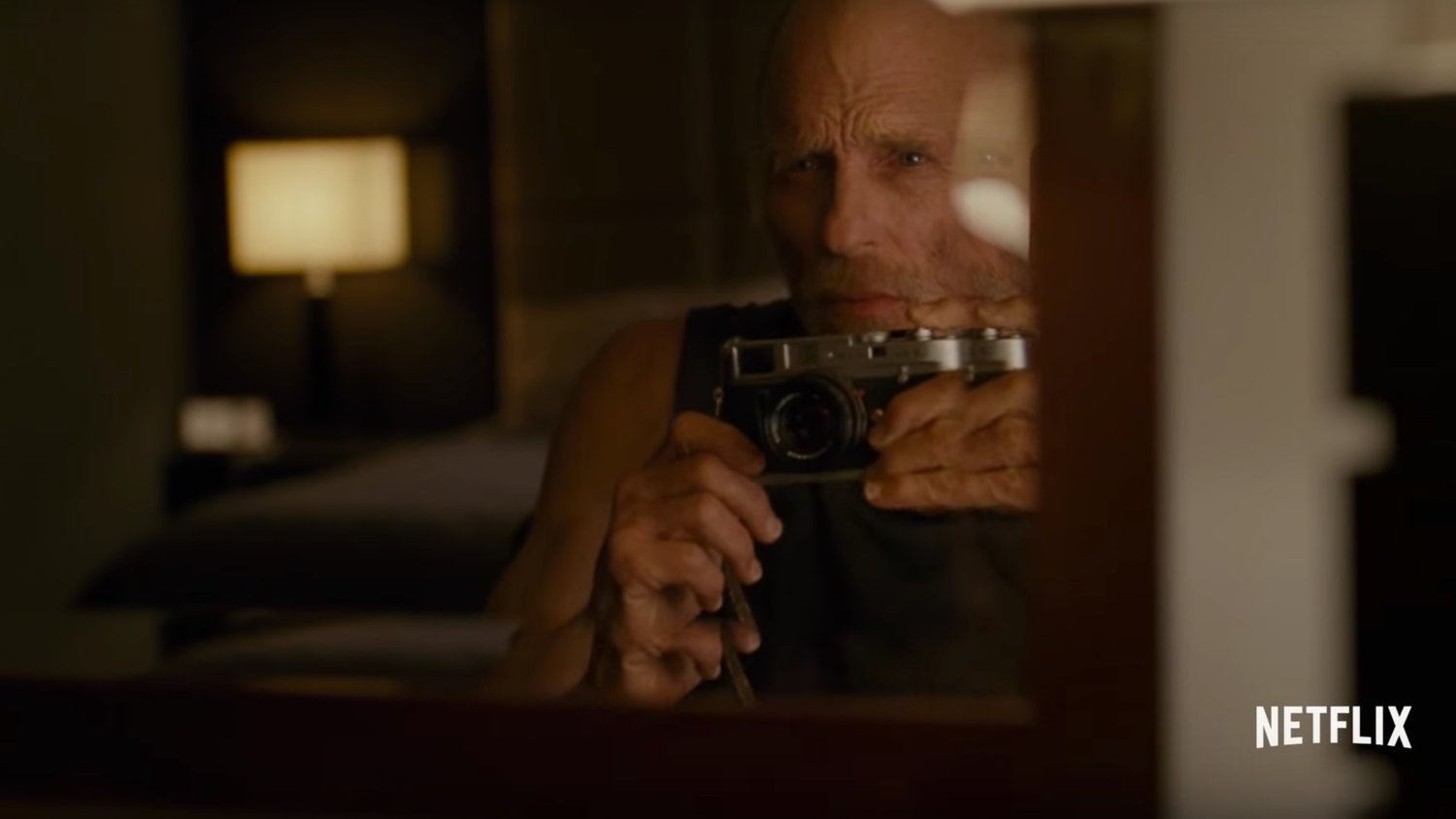
Kodachrome was the first successful colour film. It had an unmistakable quality full of deep contrasts and striking colours that was instantly iconic, not to mention the physicality of developing by slides and the connection it has maintained to something tactile and alive, which deserves acknowledgment. It is hard to say whether the feelings of nostalgia connected to it were instantaneous, though even the most recent images taken with it seemed to immediately immortalize their subject.
The soundtrack booming with some 2000s evergreens bring some joy, but their use is occasionally on the nose. It is the thespian trio’s shared alchemy that makes Kodachrome never less than watchable. Although we have seen Harris play variations on the deteriorating artist before in the much more powerfulThe Hours or Pollock (also directed by him), he finds a way to inject the part with fresh emotions.

Father-son stories are dime a dozen at this point, but as long as we share the human condition, they will stay relevant and valuable – for men. As I was getting closer to the finale, I have found myself unexpectedly moved by what transpired, and what could have been, if Ben was a better father, husband and person. As a celluloid giant takes its last breaths, so does one of its last Mohicans, and we regard fondly what he gave us, if nothing else, but our existence.
Rating: 66%

 Ágoston's Film Odyssey